Fungus on Wall: How to Remove Fungus, Algae and Moss from Exterior Walls


Fungus on a wall is one of the most common problems on buildings in India, and it gets worse through the monsoon. It usually shows up as black or green patches on exterior walls, and if it is painted over instead of treated, it comes back. This guide covers what causes fungus on walls, how to remove fungus, algae and moss properly, and how to stop it returning.
What causes fungus on walls
Fungus, mould, algae and moss grow wherever a wall stays damp. The usual causes are:
- High humidity and the monsoon, which keep outside walls wet for long periods
- Rain, leaking pipes or gutters, and rising damp that feed moisture into the wall
- Shade and poor sunlight on north-facing or tree-covered walls, so the surface dries slowly
- Poor ventilation that traps moisture
- Porous cement and plaster, which hold water and give the growth something to take hold on
Where moisture and shade meet a porous surface, spores settle and spread.
Black fungus, white marks, algae and moss
The growths look different but share one cause:
- Black patches are usually mould or fungus.
- A green film or green patches are usually algae.
- Thick, green, velvety growth is moss.
- White, powdery deposits are often efflorescence, which is salt left by water moving through the wall, not a fungus.
Why it damages paint and cement
Growth on a wall is not only a cosmetic problem. It holds moisture against the surface, so paint peels and discolours and waterproofing fails sooner. Over time the growth works into the surface and loosens it. Painting over live growth does not work, because it keeps living under the paint and pushes back through.
How to remove fungus from a wall
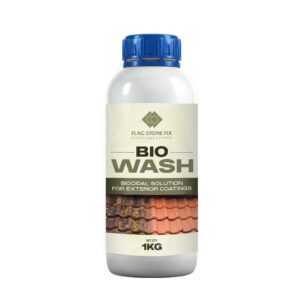
To remove fungus for good, you have to kill the growth and clean it off, then deal with the moisture that caused it. A non-acidic biocidal wash does the first part. Flagstone Fix Bio Wash is a ready-to-apply wall fungus remover for the concrete walls of buildings. It removes fungus, bacteria, algae and moss that are already present and helps prevent new growth, and because it is non-acidic it cleans the wall without damaging cement or steel reinforcement.
- Clean the surface so it is free of dust, debris, oil and loose particles, then rinse with water and let it dry. Remove any wax, epoxy or coating first.
- Apply Flagstone Fix Bio Wash by brush, and wire-brush the surface at the same time to lift hidden dirt and growth. Coverage is about 30 to 40 sq ft per litre.
- Wash the surface with water, then apply a second coat by brush.
- Let it dry before painting, or wash it off with water and paint directly.
For safety, wear gloves and goggles, do not dilute the product, and do not mix it with acid.

Algae and moss are treated the same way. The same wash removes them and helps stop them growing back. For heavy moss, scrape off the thick growth first so the wash reaches the surface underneath.

How to stop fungus coming back
- Fix the moisture source first: leaking pipes, blocked gutters and damp.
- Improve drainage, ventilation and sunlight on the wall where you can.
- Treat the wall with a biocidal wash before repainting, not after.
- Use a good exterior paint or waterproofing once the wall is clean and dry.
Treatment removes what is there. Fixing the moisture is what keeps it from returning. Flagstone Fix Bio Wash comes in 1 kg, 5 kg and 25 kg. See the full Cleaners range for more surface-cleaning products.

Frequently asked questions
Why does fungus grow on my wall?
Because the wall stays damp. Humidity, rain, leaks, shade and porous plaster keep moisture in the surface, and that is what fungus, algae and moss need to grow.
Is fungus on a wall caused by water?
Almost always, yes. It comes from water in or on the wall, whether from rain, leaks, rising damp or condensation.
Can I just paint over fungus on a wall?
No. Painting over live growth does not kill it, and it grows back through the paint. Treat and clean the wall first, then paint.
What is the white powder on my wall, is it fungus?
Usually not. White, powdery deposits are often efflorescence, salt left by water moving through the wall. The fix is still to deal with the moisture.
How do I remove fungus from an exterior wall?
Clean the surface, apply a non-acidic biocidal wash such as Flagstone Fix Bio Wash, wire-brush as you go, wash it off, apply a second coat, and let it dry before painting.