Protecting Glass, Steel and Polished Surfaces During Renovation
Paint splashes, plaster dust and scratches ruin new fittings during renovation. A water-based peelable film shields them, then simply peels off.


If you want to protect surfaces during renovation, start with a simple fact: renovation is hard on everything that is already finished. Painters splash emulsion onto window glass, plaster dust settles on stainless-steel railings, and tools scratch new aluminium frames, sanitaryware and sealed countertops. Masking tape and plastic sheet slip, tear and let dust underneath. Cleaning up afterwards takes days and sometimes damages the surface.
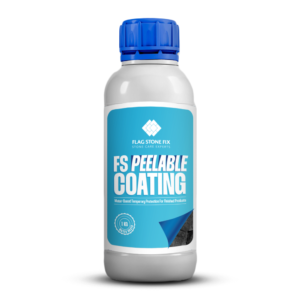
This guide is for homeowners, interior contractors and site supervisors who want to shield finished surfaces while work goes on around them. It explains how to use Flagstone Fix Peelable Coating: Water-Based, a brush-on film that protects during the job and simply peels away afterwards.

What Flagstone Fix Peelable Coating: Water-Based is (and when to use it)
It is an environment-friendly, water-based peelable coating that forms a skin-tight, water-resistant protective film. The data sheet lists stainless steel, aluminium, plastics, FRP and glass among suitable surfaces, and says it can also be used as a maskant. It shields against scratches, stains and environmental contaminants, dries quickly and comes off cleanly without residue.
It is supplied light blue. The dry film is transparent or translucent with a light blue tone, and you can tint it with a standard universal water-based stainer if you want a more visible colour. It is non-toxic and non-flammable, which makes it practical in occupied homes and offices.
Stone surfaces: it can also protect finished stone and marble, for example during storage and transit. On raw, unsealed or porous stone, test a small area first.
Not for long outdoor exposure: very long exposure to sunlight makes the film deteriorate prematurely and turn brittle, so remove it once the work is done. Saturating the film with water softens it for removal.
What you need
- Flagstone Fix Peelable Coating: Water-Based (shake well)
- Lambswool roller, paint roller or paintbrush
- Masking tape to create a pull-tab edge
- Clean water (for limited thinning and tool cleaning)
- A fan or air blower to speed drying
- Optional: spray gun capable of 70 to 120 psi
Step-by-step: how to protect surfaces during renovation
- Clean the surface. Remove dust, grease and contaminants so the film lies flat and peels evenly.
- Tape one edge. A strip of tape along one side gives you a tab to start peeling later.
- Shake well. The liquid is supplied ready for brushing. If needed, thin with no more than 3% water for easier brushing.
- Apply the first coat evenly with a roller or brush.
- Let it dry. Drying takes about 15 to 30 minutes depending on thickness, humidity and temperature. The coat looks hazy at first; a stream of hot or cold air, or sunlight, helps it dry to a transparent film.
- Apply further coats. Put on at least 2 to 3 coats, each in the opposite direction to the previous one, and only after the previous coat has dried properly.
- Build enough thickness. 1 kg covers roughly 100 to 200 sq ft at a dry film of 50 to 100 microns. For easy removal, aim for at least 100 to 120 microns.
- For spraying instead: add 10 to 12% water, use a clean gun free of oil, lacquer and grease, spray at 70 to 120 psi, and recoat 2 or 3 times while wet for a thicker film.
- Peel when the job is done. The cured film can be peeled after 12 to 24 hours, starting from the taped edge. It can also be removed with a water stream. If the film has over-dried, sponge it with water, wait 5 minutes and then remove it.
- Wash tools with water immediately after use.
Tips and common mistakes
- Too thin is the main mistake. A thin film tears into pieces. Build up the coats.
- Patch, do not restart. A ripped section can be lifted and resealed with a fresh wet coat.
- Do not leave it on in strong sun for months. Remove it once the work is over.
- Avoid peeling in freezing conditions, when the film becomes brittle.
Safety and storage
The data sheet describes the product as non-toxic and non-flammable, and the dry film can be disposed of as low-hazard waste. Wear gloves and keep it away from children as with any site chemical. Store between 10 and 30°C in a cool, dry place away from sunlight. Shelf life is 6 months from manufacture; if it freezes, thaw to 20 to 30°C and reuse.
Frequently asked questions
Is it safe to use indoors in an occupied home?
The data sheet describes it as water-based, non-toxic and non-flammable, and tools wash out with water, which makes it practical for indoor renovation. Ventilate as usual while it dries.
Can I use it on unsealed natural stone?
It can be used on finished stone and marble, for example to protect slabs in storage and transit, and the data sheet names surfaces such as stainless steel, aluminium, plastics, FRP and glass. Treat raw or unsealed stone only after a test patch.
What if the film tears before the job is done?
Lift the torn area and apply a fresh wet coat over the patch. The data sheet says it will rejoin and bond into the original film by itself.
Need help?
Buy Flagstone Fix Peelable Coating: Water-Based from Flagstone Fix to protect surfaces during renovation. Once the work is over, our Deep Cleaning team can clear the site residue from your floors and stone. WhatsApp us on +91 87792 40420.