
Give Exposed Brick and Concrete a Rich, Wet-Look Finish
A water-based, colour-enhancing, stain-resistant treatment gives exposed brick, concrete and terracotta a deeper wet look in a matt or satin finish.

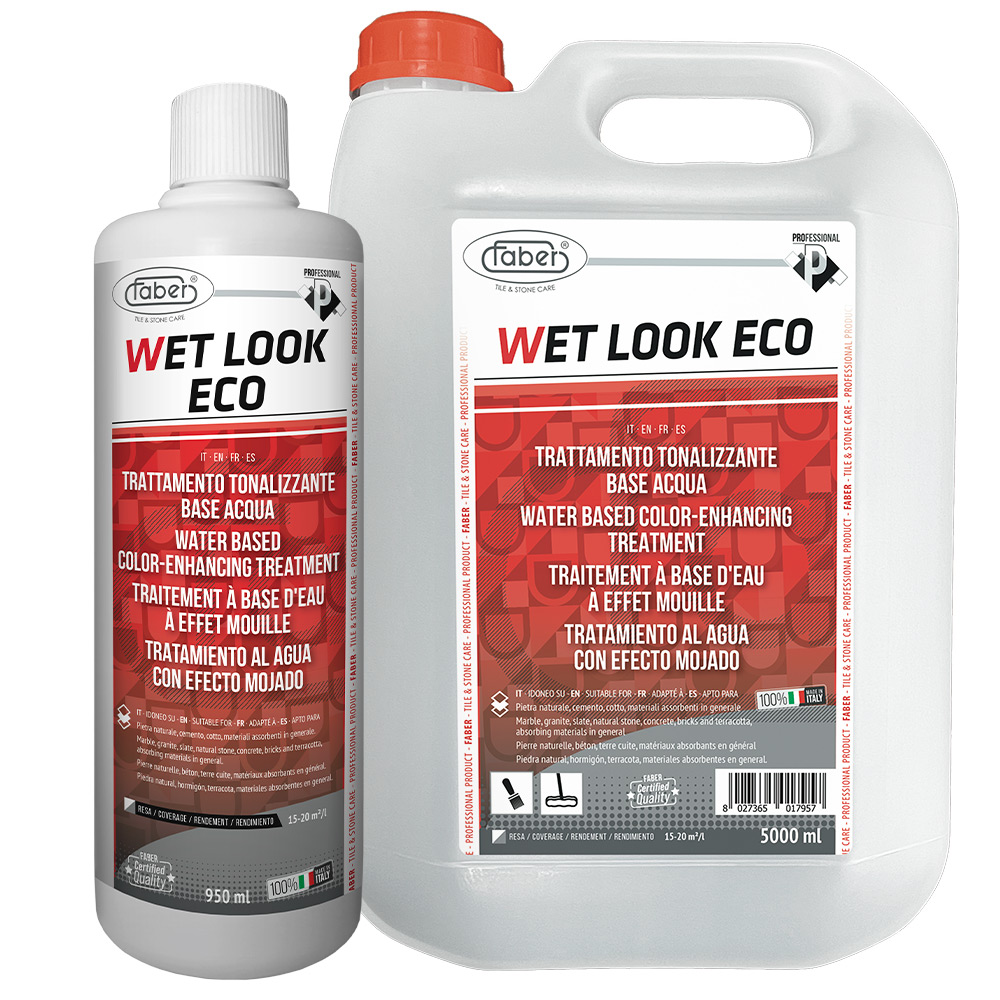
Exposed brick walls, cast concrete and terracotta are everywhere in Indian cafés, studios and modern homes. When new they look warm and rich. After a while they turn dusty, chalky and pale, and they soak up every splash, from tea to cooking oil. A wet look sealer for exposed brick brings that richness back.
The right treatment also adds stain resistance. This guide shows how to use Faber Wet Look Eco, a water-based option, on exposed brick, concrete and other absorbent surfaces. It is written for homeowners, interior designers and contractors finishing feature walls, patios and floors.

What Faber Wet Look Eco is (and when to use it)
Faber Wet Look Eco is a water-based, stain-resistant, colour-enhancing treatment that penetrates the material instead of forming a film on top. It intensifies colour and gives a satin or matt finish depending on the surface, and it will not yellow over time.
It is made for materials with a medium-high degree of absorption, and can be used indoors and outdoors on natural stone, terracotta, bricks, concrete, agglomerates and concrete tiles. It is water-based, and the data sheet lists it as unscented.
When not to use it: it is not suitable for porcelain tiles or quartz. Never apply it to wet or damp surfaces.
What you need
- Faber Wet Look Eco (1 or 5 litre; coverage 15 to 20 m² per litre)
- A brush, lambswool applicator or roller
- Clean water for dilution and a measuring jug
- For a satin finish: a single-disc machine or hand polisher with a white pad and a felt pad
- Masking tape and sheets to protect frames, fittings and adjacent surfaces
- Gloves and eye protection
Step-by-step: applying a wet look sealer for exposed brick
- Clean thoroughly. Remove dust and dirt with a neutral-pH cleaner, rinse, and let the surface dry completely. Remove any old sealers, wax or residue.
- Check the weather. Apply between 5 and 35°C, not on overheated surfaces, and never when rain, mist, fog or high humidity is likely. In the monsoon, choose a dry spell or work indoors.
- Protect nearby surfaces that are not being treated.
- Test a patch on an unexposed area or spare brick to check the effect.
- Dilute to suit the surface. Use it undiluted on highly absorbent, rough surfaces such as old brick. Dilute 1:1 with water for medium to medium-high absorbency and textured finishes. Dilute 1:2 for medium-absorbency, compact surfaces.
- Apply a thin, even layer over the whole area with your chosen tool.
- Deal with residue on compact surfaces. Highly absorbent surfaces soak it up during or just after application. On less absorbent ones, a residue may form: within 5 minutes, either wipe it off with the same tool without adding product (keeps a matt look) or buff it.
- For satin, buff by machine. Buff first with a clean white pad, then immediately with a felt pad, until the surface is dry to the touch.
- Second coat if needed. On highly absorbent surfaces, wait at least 2 to 3 hours before a second coat.
- Let it dry. It dries within 1 to 2 hours. Resume use after 4 to 6 hours.
Tips and common mistakes
- Don’t apply to damp brick. Brick holds moisture for a long time after washing or rain; give it time to dry right through.
- Get the dilution right. Use it undiluted only on highly absorbent, rough surfaces. Compact surfaces need it diluted and can leave a surface residue that must be removed or buffed before it dries.
- Wait for new mortar to cure. On recently laid or grouted surfaces, let the adhesive or grout cure completely first.
- Layering over a water-repellent? If the material was primed with a penetrating water-repellent sealer, wait until it is completely dry.
- Use the same tool to remove residue. Adding fresh product while wiping only increases residue.
Safety and storage
Use suitable personal protective equipment, such as gloves and eye protection, and follow the safety data sheet. Ventilate indoor spaces and keep children and pets away until the surface has dried. Tools can be washed with water. Store the container tightly closed in a cool, dry place; shelf life is 24 months in the original sealed pack.
Frequently asked questions
Will Faber Wet Look Eco make my brick wall shiny?
Not by default. It gives a matt or satin finish depending on the surface. On less absorbent surfaces you can buff the residue to get a satin finish, or wipe it off to keep the look matt.
Can I use it on vitrified or porcelain tiles?
No. The data sheet says it is not suitable for porcelain tiles or quartz. It is meant for absorbent materials such as brick, concrete, terracotta and natural stone.
How soon can the area be used?
It dries within 1 to 2 hours, and the surface can be used again 4 to 6 hours after application.
Need help?
Order Faber Wet Look Eco, a water-based wet look sealer for exposed brick, from Flagstone Fix, or let our team clean and treat your walls with our Facade Cleaning & Sealing service. WhatsApp +91 87792 40420 with photos and the area to be treated.


