
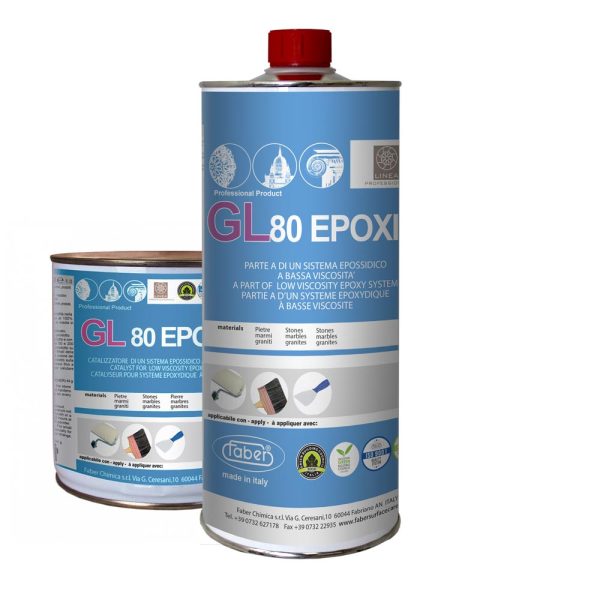
GL 80 EPOXY (A+B)
Low viscosity epoxy system.
Description
GL EPOXY 80 is a low viscosity epoxy system with a deep power of penetration into the stone surface. Not chemically charged and solvent free, therefore 100% reactive. The product hardens by room temperature.
GL EPOXY 80 has been studied to repair small and medium creeks in any type of marble, granite and natural stones.
FAQs
What is GL 80 EPOXY used for?
GL 80 EPOXY is used for repairing small to medium cracks in marble, granite, and other natural stone surfaces with a powerful deep penetration.
Is GL 80 EPOXY safe to use on all types of stone?
Yes, GL 80 EPOXY is safe for use on all types of marble, granite, and natural stones.
How does GL 80 EPOXY cure?
GL 80 EPOXY hardens at room temperature without the need for heat, offering a hassle-free application.
Will GL 80 EPOXY change the appearance of my stone?
GL 80 EPOXY will restore the surface and blend seamlessly with the stone, making cracks less noticeable without changing the overall appearance.
Can GL 80 EPOXY be used for waterproofing?
While GL 80 EPOXY is primarily for repairs, its deep penetration helps to provide some level of waterproofing on the treated surface.
What is the shelf life of GL-80 Epoxy AB?
GL-80 Epoxy AB has a shelf life of 24 months when kept in its original, factory-sealed packaging and stored in a cool, dry place away from direct sunlight and extreme temperatures.
Is GL-80 Epoxy AB resistant to water and oil?
Yes. GL-80 Epoxy AB’s 100% reactive, solvent-free formulation penetrates deeply into stone pores and, once cured, imparts pronounced water- and oil-repellent properties—helping protect repaired areas from moisture ingress and oil-based staining.
Does GL-80 Epoxy AB yellow over time?
GL-80 Epoxy AB cures to a clear to pale-yellow gel. Like most standard epoxies, prolonged exposure to UV light and oxygen can lead to gradual yellowing or hazing. However, for typical indoor stone repair or sheltered installations, any discoloration is minimal. To further guard against yellowing in outdoor or high-UV applications, consider:
1. Limiting direct sunlight on the cured surface.
2. Applying a UV-resistant clear topcoat if long-term outdoor exposure is expected.