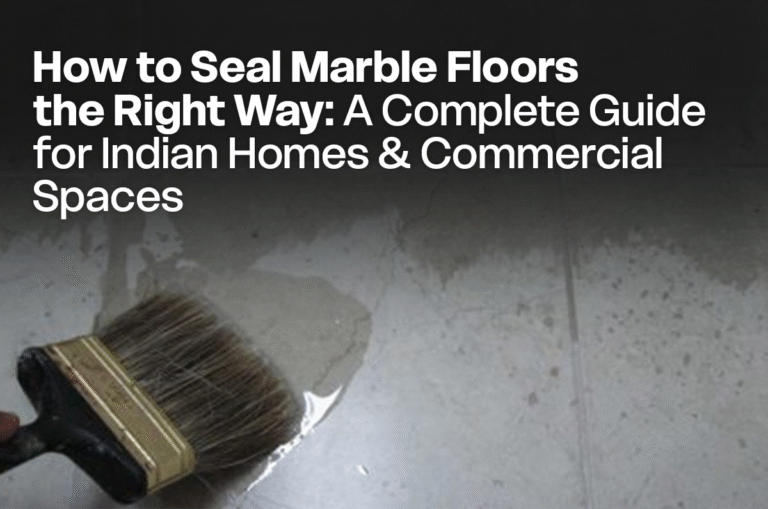
LIQUID WAX vs MULTISHINE vs LUX ONE

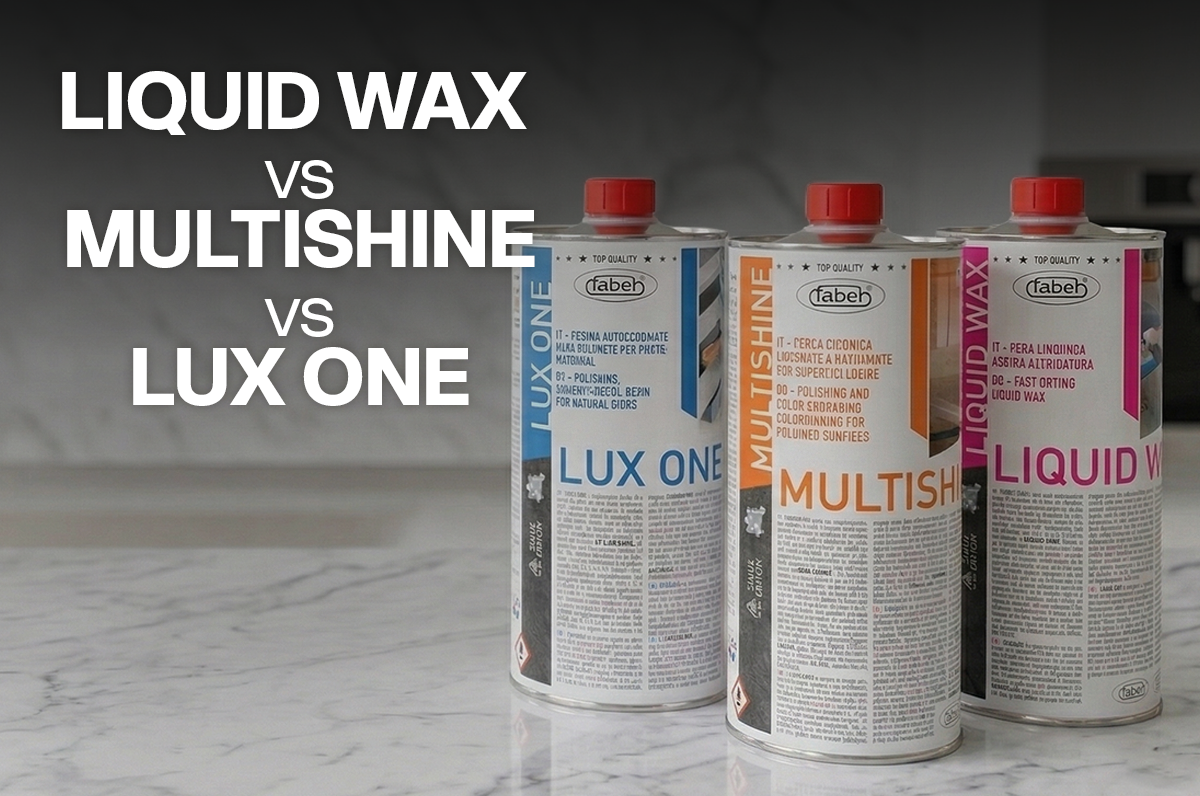
LUX ONE is a high-solids, solvent-based protective resin specifically formulated for the stone industry. Its application is highly targeted: to finish rough or poorly processed surfaces that cannot be reached by mechanical polishing.
The product is designed to create a durable, self-polishing resin film that offers a dual action: aesthetic and protective.
- Instant Polishing and Enhancement: LUX ONE delivers a high, deep, glossy finish, achieving results very similar to those of machinery. Simultaneously, it enhances the material’s colour by highlighting its veins and textures for a marked, long-lasting “wet look.”
- Ideal for Difficult Finishes: Its classic use is on the edges (coasts), corners, or shaped profiles of slabs made of marble, granite, natural stone, or agglomerates. In these areas, application by brush or cloth replaces mechanical processing, resulting in a uniform finish across the entire surface.
- Protection and Water Repellency: The resin forms a surface layer that not only polishes but also acts as a protective film, providing the material with a good degree of water- and stain-repellency. This protects the edges, which are typically more absorbent, from stains and dirt, significantly easing maintenance.
Additional Technical Features
- Solvent-Based: Ensures quick drying and strong adhesion to substrates.
- High Solids: Achieve a notable shine with a single, well-distributed application.
- Versatility: It is also effective on terracotta (cotto) and concrete, creating a shiny, warm, and protective surface.
MULTISHINE is a premium, solvent-based enhancing silicone wax. It is specifically formulated as a finishing and refining product for stone surfaces that have already undergone mechanical polishing.
Unlike high-solids resins (like LIQUID WAX), which create a substantial surface film, MULTISHINE is designed for a more selective and localised approach as it creates a less thick layer:
- Defect Concealment: Its primary goal is to fill and visually hide micro-defects. This includes minor scratches, swirling marks, or the “advancement marks” left by diamond abrasives during the polishing cycle. The silicon wax settles into micro-porosities and imperfections, creating a visually uniform surface.
- Enhanced and Uniform Shine: Used as a final touch, the product ensures a visible increase in the material’s gloss, eliminating unevenness and guaranteeing a high degree of specular shine across the entire treated area.
- Colour Tonalization: MULTISHINE slightly penetrates the material, saturating its colour and reviving the natural veining. It is particularly effective on dark or highly pigmented stone materials (such as certain granites or marbles) where the enhanced effect is maximised.
Additional features
- Speed and Simplicity: The solvent-based formula and the wax’s nature allow for extremely simple, rapid application (typically with a cloth). A major operational advantage is that, once the solvent evaporates, the product does not require mechanical re-polishing (only a final buff with a clean, dry cloth or felt), significantly accelerating the finishing process in the workshop.
- Added Stain Resistance: The layer of wax deposited on the surface provides good hydro- and oil-repellent properties, giving the material an additional level of protection against common stains (oil, grease, water).
LIQUID WAX is a professional solvent-based liquid wax, formulated with a selection of high-quality paraffins. It stands out for its ability to create a layer on the stone surface, maximising its aesthetics and protection through a process that requires a final polishing phase.
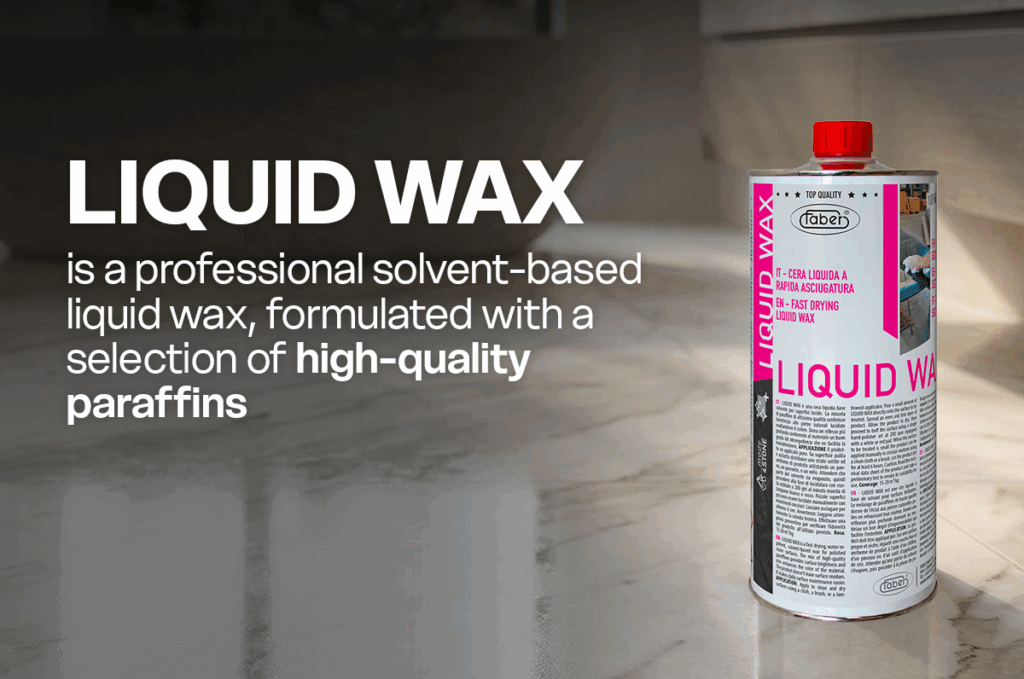
LIQUID WAX is designed for the restoration and aesthetic enhancement of polished and semi-polished surfaces made of marble, granite, and other natural stones, but it can also be used on rougher finishes:
- Extreme Aesthetic Enhancement: The main goal is a high increase in the material’s shine. The paraffin formula is designed to settle and crystallise on the surface, creating a film that, once polished, delivers deep, long-lasting brilliance.
- Intense and Uniform Tonalization: It acts as a powerful toner, enhancing and saturating the stone’s colour. This action is crucial for restoring vibrancy to materials that appear “dull” or for dark and colored natural stones.
- Correction of Noticeable Defects: Thanks to the nature of paraffins, LIQUID WAX can conceal and mask more noticeable polishing defects and scratches that less potent products cannot cover.
The distinguishing factor of LIQUID WAX is its application methodology:
- Polishing Requirement: After uniform application (by spatula or cloth) and allowing the solvent to evaporate, the wax residue must be polished to activate the wax’s full shine potential.
- Specific Tools: Polishing is typically performed with tools such as fine steel wool and felt pads, often aided by a hand tool polisher or a single-disc machine, to ensure the uniformity and depth of the final gloss.
In addition to the aesthetic finish, the paraffin wax layer contributes to:
- Hydro- and Oleo-repellency: Offering a good degree of water and oil repellency, helping to protect the surface from the absorption of water and staining substances, making maintenance easier.
As shown above, LUX ONE serves a specific application, while MULTISHINE and LIQUID WAX have overlapping uses.
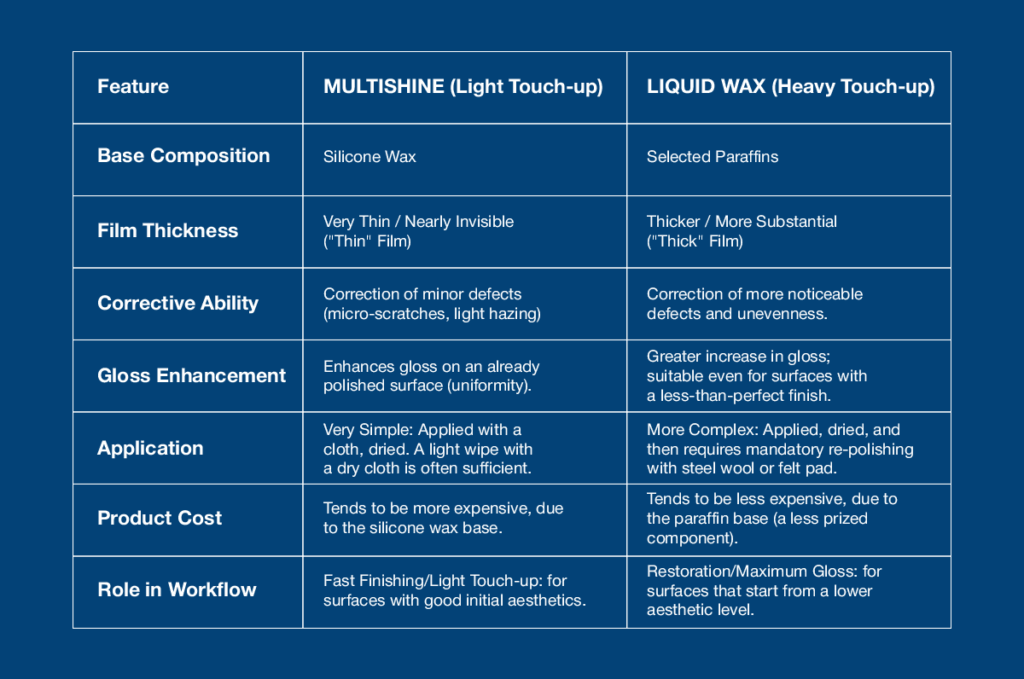
The main difference between the two products is the film thickness they create on the surface.
MULTISHINE is best suited for surfaces that have already been mechanically polished. It’s a finer film that corrects lighter defects and gives a finishing shine without altering the appearance or texture, making it ideal for final touch-ups where minimal correction is needed.
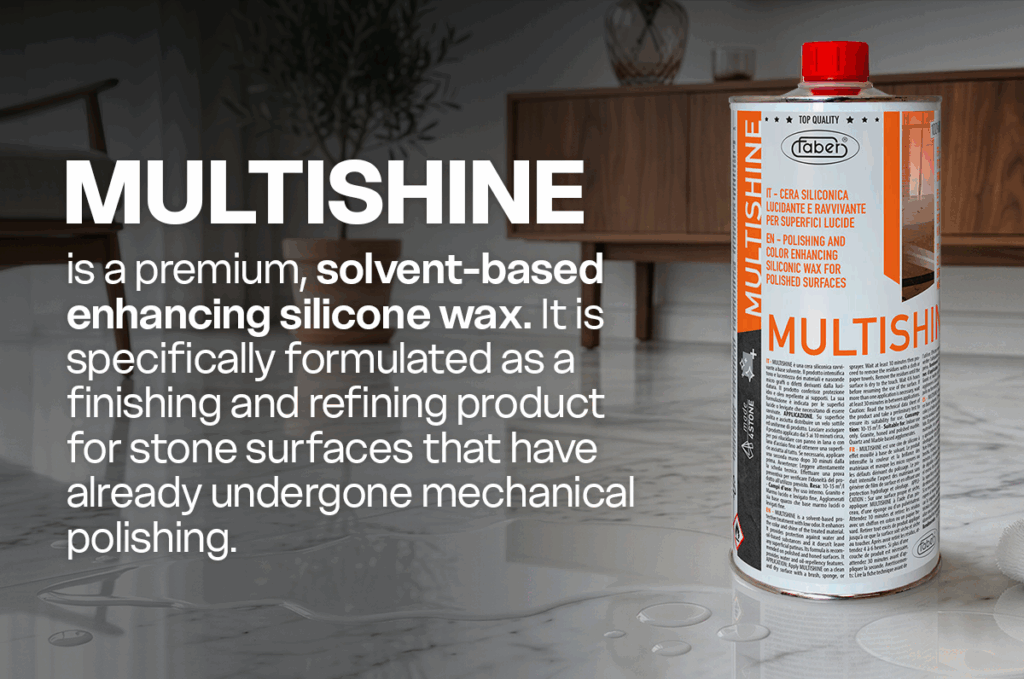
LIQUID WAX, on the other hand, is designed to achieve greater thickness (because it is paraffin-based, while MULTISHINE is silicone-based). This greater thickness translates into a higher ability to conceal defects and unevenness. Likewise, LIQUID WAX can provide a greater increase in gloss and can therefore be used on surfaces with a non-glossy finish to achieve a more brilliant effect.
From an application perspective, LIQUID WAX requires more steps compared to MULTISHINE.
MULTISHINE is applied with a cloth, allowed to dry, and that may be sufficient. At most, the surface can be lightly wiped again with a cloth to uniform the finish.
LIQUID WAX, however, must be applied, allowed to dry, and then re-polished with steel wool or a felt pad to “develop” its full shine.
The price difference between the two products is primarily due to their chemical composition: MULTISHINE is based on silicone waxes, while LIQUID WAX is based on paraffin, a less valuable and less expensive component.
MULTISHINE is intended for quick, simple touch-ups to enhance surfaces that are already in good condition, making it the preferred option for fast refinements with minimal effort.
LIQUID WAX is slightly more complex to apply and represents a “heavier touch-up“ to improve aesthetics when the starting level is lower.
The Operational Choice
- When speed is the primary concern, and defects are minimal, choose MULTISHINE. Minimum effort, excellent result in uniformity and finish.
- When serious defects need masking or maximum gloss is required: Choose LIQUID WAX. It requires more labour and specific tools, but offers superior filling capacity and brilliance.