How to Stop Dusting on Concrete Floors

A concrete floor that keeps shedding fine grey powder, no matter how often it is swept, is dusting. It is one of the most common complaints on warehouse, factory, basement and parking floors in India, and it does not fix itself. This guide explains why concrete dusting happens, how to stop it, and where a concrete hardener fits in.
What concrete dusting is
Dusting is the wearing away of a weak surface layer on hardened concrete. When a slab is placed, water rises to the top as the concrete settles (bleeding). If that water carries fine cement and silt with it, a thin, weak layer called laitance forms at the surface. Laitance has a high water-cement ratio, low strength and poor wear resistance, so foot traffic, trolleys and vehicles grind it into powder. The powder is the floor itself coming off.
Why concrete floors dust
- Too much water in the mix. A wet mix is easier to place but bleeds more, leaving more laitance at the surface.
- Finishing while bleed water is still on the surface. Trowelling works the water back into the top few millimetres and weakens them.
- Poor curing. If the surface dries out before the cement has hydrated, the top layer never reaches its strength. Hot, dry and windy conditions make this worse.
- Carbonation. Carbon dioxide in the air reacts with fresh concrete that has not been protected, producing a soft, chalky skin. This is common on floors cast in enclosed spaces with unvented heaters.
- Freezing or rain during the first days, which damages the surface before it has set.
Whatever the cause, the result is the same: the top of the slab is weaker than the concrete beneath it. Sweeping, mopping and painting over it do not change that.
How to stop dusting on a concrete floor
The fix has two parts: remove what is loose, then harden what remains so it stops wearing away.
1. Remove the loose layer
Vacuum or sweep off the powder, then take off the weak laitance itself. On a light case a stiff scrub and rinse is enough. On a floor that has been dusting for years, mechanical grinding is the reliable way to reach sound concrete. A hardener applied over loose material only binds the loose material.
2. Apply a penetrating concrete hardener
A liquid concrete hardener (also called a densifier) soaks into the pores of the surface and reacts with the free lime left over from cement hydration, forming additional calcium silicate hydrate, the same binder that gives concrete its strength. The surface becomes denser, harder and more resistant to abrasion, so it stops releasing dust. Because the treatment is inside the concrete rather than a film on top, it does not peel or wear off the way a paint or coating can.
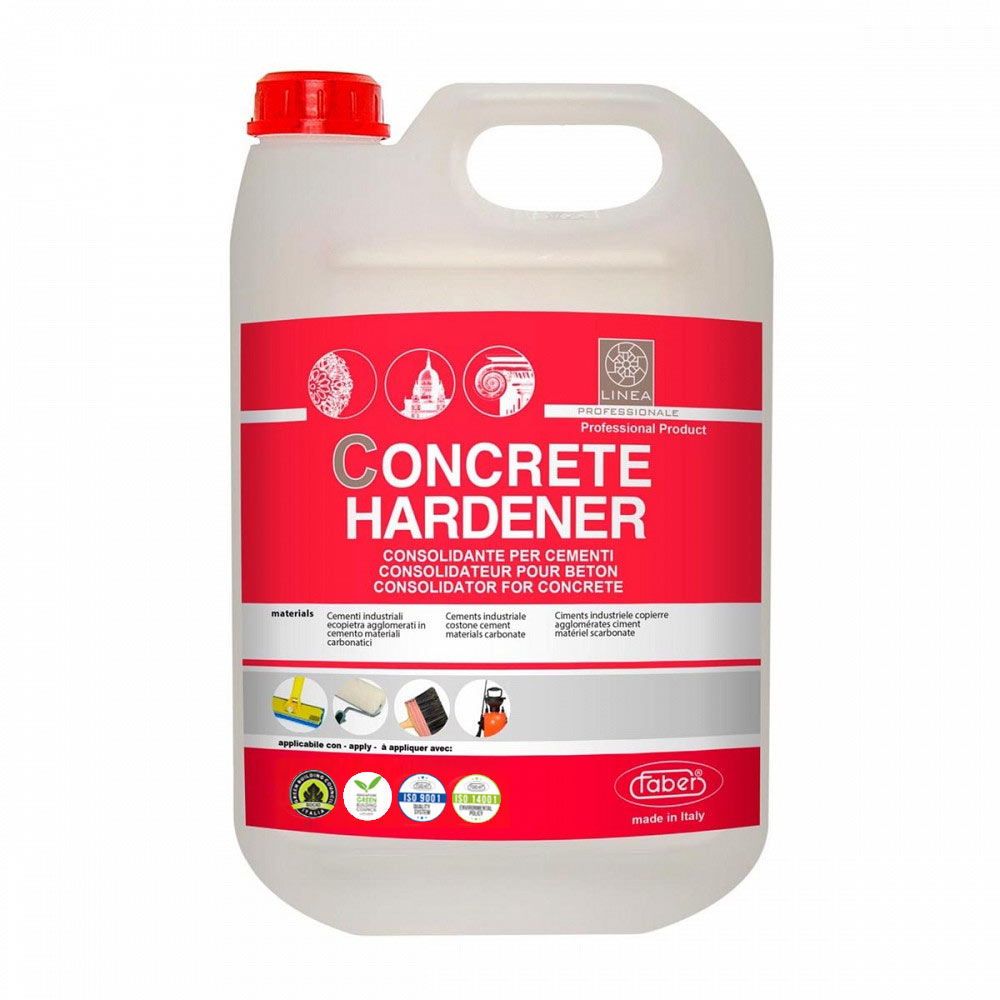
Flagstone Fix Concrete Hardener is a water-based consolidating treatment of this type. It strengthens the surface and is designed to improve the grinding and polishing process on concrete, so it fits naturally into step 1 when the floor is being ground. It also acts as a water-resistant, consolidating primer before a stain-resistant treatment, improving the performance and durability of the protection applied over it.
3. Protect the hardened surface
Hardening stops the dust. It does not stop oil, grease or water from soaking in. On floors that see spills or vehicle traffic, follow the hardener with a stain-resistant treatment. For a floor that also needs a finished look, a resin-wax concrete floor finish seals the surface with a dirt-resistant layer that withstands heavy traffic and gives a satin finish.
4. Prevent it on the next slab
Use the lowest workable water content, wait for bleed water to disappear before trowelling, and cure the slab properly for the first seven days by keeping it wet or covered. Most dusting is a placing and curing problem that is far cheaper to avoid than to repair.
Liquid hardener or dry-shake hardener?
The two are not interchangeable. A dry-shake hardener is a powder broadcast onto fresh concrete and trowelled in while the slab is still being placed; it cannot be used on an existing floor. A liquid penetrating hardener is applied to hardened concrete, new or old, which is why it is the option for a floor that is already dusting.
Frequently asked questions
Can I just paint a dusting concrete floor?
Paint bonds to the weak laitance, not to sound concrete, so it lifts along with the layer it is stuck to. Remove the laitance and harden the surface first; a coating applied after that has something solid to hold on to.
Does a concrete hardener change how the floor looks?
A penetrating hardener works inside the concrete and leaves no film, so the floor keeps its appearance. Any change in sheen comes from the grinding and polishing done with it, not from the hardener itself.
Is a hardener the same as a sealer?
No. A hardener strengthens the concrete so it stops dusting. A sealer or stain-resistant treatment reduces the absorption of liquids. On most working floors you need the hardener first and a protective treatment on top; Flagstone Fix Concrete Hardener is designed to act as the consolidating primer for exactly that sequence.