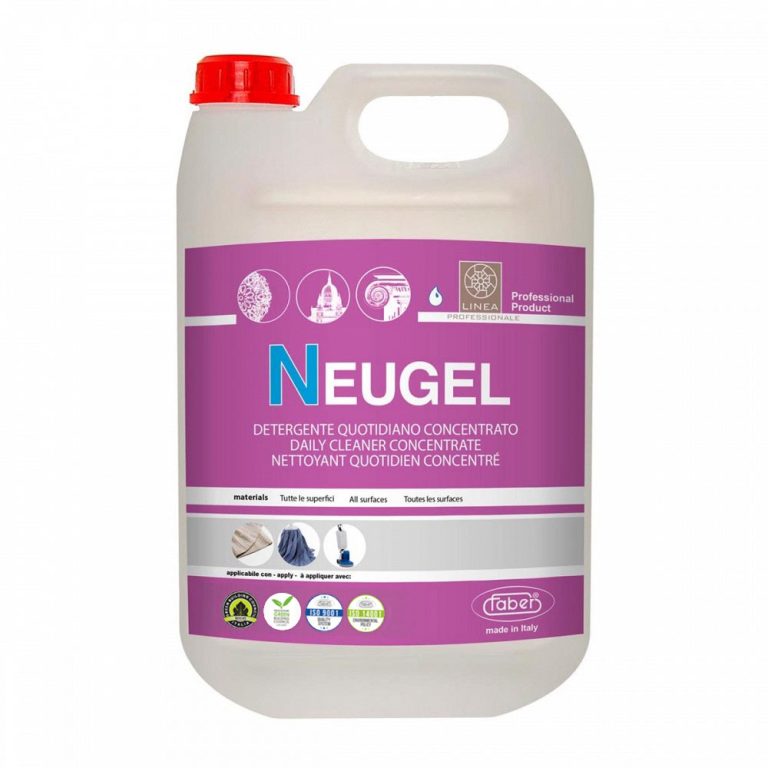
Spray-On Sealer for Stone and Exposed Concrete: How to Apply It
How to spray-apply a ready-to-use nanocoating sealer on absorbent stone and exposed concrete, with consumption figures and practical tips.

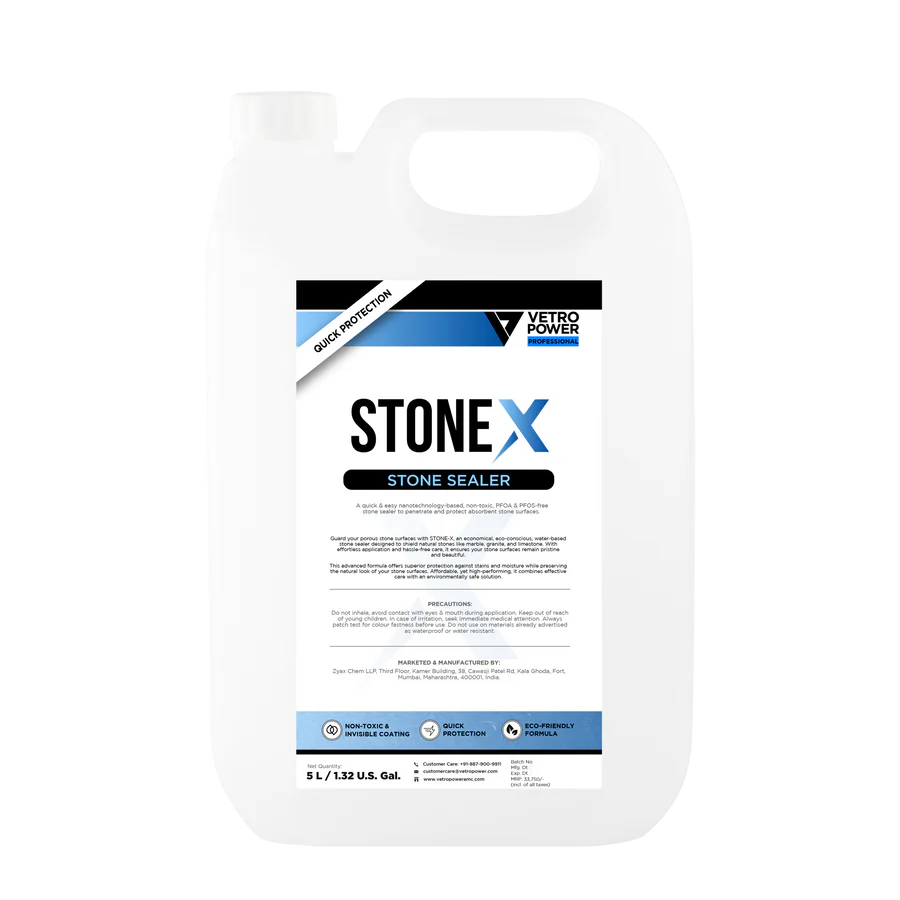
Exposed concrete walls, sandstone cladding, granite steps and clay tiles all soak up water and dirt, which is why a spray-on stone sealer is worth considering. In Indian cities, that absorption shows up as monsoon streaks, black dirt lines and patchy staining on facades, boundary walls and outdoor floors. Brushing a sealer onto a large wall by hand is slow, and it is easy to miss spots.
This guide is for architects, contractors and property owners who want to protect absorbent stone and concrete quickly and evenly. It explains how to use Vetro Power Professional Stone X Stone Sealer, a ready-to-use nanocoating protector designed to be sprayed.
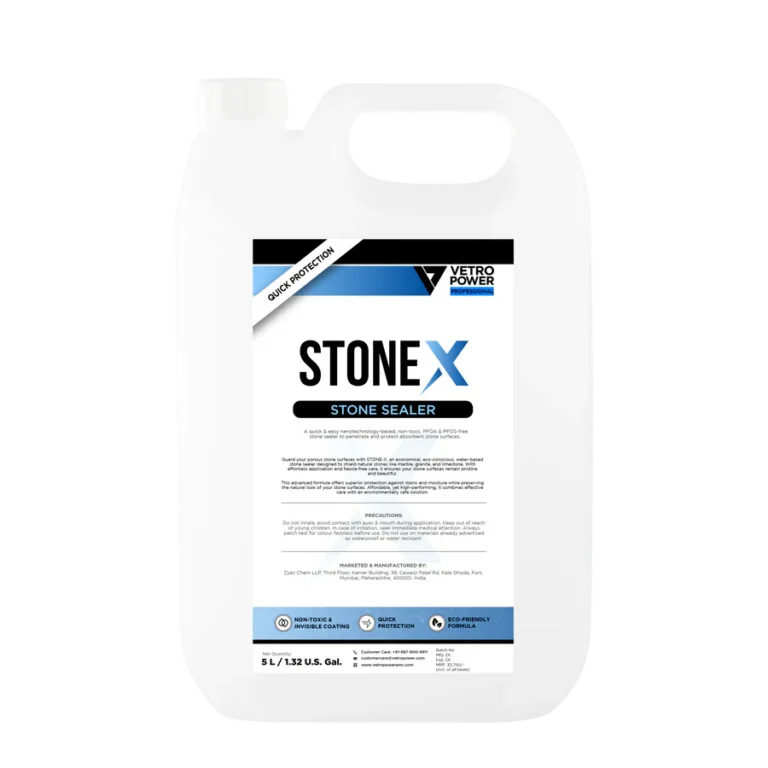
What Stone X is (and when to use it)
Stone X (named Stone-X Nanocoating Protector on its technical data sheet) is a ready-to-use surface protection system for absorbent stone surfaces. The data sheet lists these features:
- hydrophobic (water-repellent);
- soil-repellent;
- resistant to abrasion;
- weather-resistant;
- no change in look and feel.
It is hydrophobic and soil-repellent, so it helps the stone resist moisture and dirt.
Where it can be used: the data sheet lists absorbent surfaces such as light, mineral, translucent, aerated and exposed concrete, shotcrete, polymer concrete, granite, marble, sandstone, slate, limestone and clay tiles. That makes it useful for exposed-concrete architecture, stone cladding, compound walls and outdoor paving alike.
It is intended for absorbent surfaces. On very dense or glazed surfaces there is little for a penetrating product to soak into, so test first.
What you need
- Vetro Power Professional Stone X Stone Sealer
- A spray device, ideally with HVLP (high volume, low pressure) nozzles; industrial spray equipment is also suitable
- Alternatively: a brush, lambswool roller or a tank for dipping (expect higher consumption)
- Cleaning equipment to remove dust, grease and old cleaner residue
- Masking tape and sheeting for glass, frames and plants
- Protective clothing, gloves, eye protection and a mask suitable for spray mist
Step-by-step: how to apply a spray-on stone sealer
- Clean the surface. For a long-lasting effect, the surface must be free of dust, grease and residues of cleaning agents. Rinse off any cleaner thoroughly.
- Check moisture. The product can be applied to recently formed and still damp substrates, which helps on new concrete work.
- Mask off windows, metal and anything that should not be sprayed.
- Test an inconspicuous area for stability and functionality, as the data sheet recommends for all surfaces.
- Spray the first pass. Hold the nozzle about 15 cm from the surface and spray evenly.
- Spray again wet-on-wet. When spraying by hand, apply at least two passes while the first is still wet.
- Work square metre by square metre on large areas so you keep a wet edge and do not miss patches.
- Avoid ponding. Do not let product collect in puddles on the surface.
- Repeat if needed. Depending on the porosity of the surface, the process may need to be repeated. Consumption is between 20 and 60 ml per m2, so one litre covers roughly 17 to 50 m2.
Tips and common mistakes
- Do not spray over a surface that still has detergent on it; cleaner residue weakens the result.
- Very porous surfaces such as aerated concrete or soft sandstone will sit at the higher end of the consumption range.
- Avoid spraying in strong wind, which wastes product and carries mist onto neighbouring surfaces.
- Afterwards, avoid bleach and strongly alkaline or abrasive cleaners on the treated surface; the manufacturer excludes damage caused by these from its responsibility.
- The data sheet notes that, because of the raw material used, occasional batch-related visual colour differences can occur and are not a defect.
Safety and storage
- Wear suitable protective clothing. Do not inhale the spray mist or the liquid.
- If it gets on skin, rinse off immediately with water. Avoid contact with eyes; if contact occurs, rinse immediately with water and seek medical treatment if symptoms appear. Do not swallow.
- Keep out of reach of children.
- Keep containers closed after use so dirt cannot get in.
Frequently asked questions
Will Stone X change the look of my stone?
The data sheet lists no change in look and feel among its features, and it is designed not to alter the stone’s natural appearance. Test an inconspicuous area first, as recommended.
How much product will I need?
Consumption depends on how absorbent the surface is and is between 20 and 60 ml per m2 when sprayed. Brushing, dipping or rolling generally uses more.
Can I apply it to concrete that is still damp?
Yes. The data sheet says it can be applied to recently formed and still damp substrates. The surface must still be free of dust, grease and cleaning residues.
Need help?
You can order Vetro Power Professional Stone X Stone Sealer from Flagstone Fix as a spray-on stone sealer for your project. For large facades, exposed concrete or multi-floor jobs, our team can apply it through our Nano-Coating for Stone & Tiles service. WhatsApp +91 87792 40420 to discuss your site.