
Why Limestone Requires Careful Product Selection (and How to Avoid Damage)


Limestone is more sensitive to the wrong cleaning and sealing products than most other natural stones, and using the same all-purpose cleaner or sealer that works fine on granite or porcelain can permanently etch, dull, or discolour a limestone surface. The reason comes down to what limestone is made of: understanding that composition is the key to choosing products that protect it rather than damage it.
Why Limestone Reacts Differently Than Granite or Porcelain
It’s a frustrating experience: you clean a limestone floor or facade with a product that works perfectly well elsewhere in the house, and within days a dull, rough patch appears where none existed before. Limestone is a calcium-carbonate-based stone, which makes it chemically reactive to acid in a way that granite (a much harder, acid-resistant silicate stone) and porcelain (a manufactured, non-porous material) are not. Even mild acids such as lemon juice, vinegar, and many bathroom and glass cleaners will etch limestone on contact, leaving a dull, rough patch where the polish or finish has been chemically eaten away. Limestone is also typically more porous than granite, which means it absorbs liquids, oils, and dirt more readily and is more prone to staining if left unsealed or under-sealed.
The #1 Mistake: Using Acidic or Generic Cleaners
The single most common cause of limestone damage isn’t heavy use; it’s reaching for the wrong bottle under the sink. Many everyday cleaners, including bathroom sprays formulated to cut through limescale, are acidic by design, which makes them effective on ceramic tile but destructive on limestone. The safer approach is a pH-neutral cleaner formulated specifically for natural stone, such as Neugel, which is formulated for marble and natural stone without the acidity that causes etching.
Sealing Limestone the Right Way
Because limestone is porous and prone to absorbing moisture, sealing is a bigger part of its long-term care than it is for denser stones. Limestone Densifier is formulated specifically for limestone and lime-based materials; it’s a water-based, VOC-free impregnating treatment that reduces porosity, offers water-repellent protection against rising damp, and even improves the stone’s workability during mechanical polishing. Applied undiluted and left to penetrate for 10–15 minutes before back-rolling excess, it cures over 24–48 hours and provides long-term protection without leaving a surface film.
Daily and Deep Cleaning Without Damage
For routine upkeep, a pH-neutral daily cleaner such as Mild Stone Cleaner Plus is formulated to lift everyday dirt without the acidity risk of a generic household cleaner. For a deeper clean on natural stone surfaces, Neugel remains the safer option over an alkaline or acidic deep-cleaning product not formulated for limestone; specifically, always check that any cleaner used on limestone is explicitly rated safe for calcareous (acid-sensitive) stone before applying it.

Common Limestone Applications in Indian Homes
Limestone and lime-based stones show up across a wide range of Indian residential and commercial settings: flooring in courtyards and verandahs, cladding on facades, and increasingly as a design choice for its soft, matte look in interiors where a high-gloss marble finish isn’t wanted. Kota stone, a well-known limestone variety widely used across India, shares the same acid sensitivity and porosity concerns described above, which is why the products recommended for limestone are equally relevant whether the surface is an imported material or a regionally quarried one. In each of these settings, exposure to monsoon humidity, rising damp from the ground, and everyday cleaning routines all interact with the stone’s chemistry in ways that make product selection more consequential than it would be for a sealed porcelain tile.
A Simple Maintenance Routine That Protects Limestone
- Sweep or dust-mop daily to remove grit before it can scratch the softer surface
- Damp-mop weekly with a pH-neutral cleaner diluted according to the label, never a generic multi-surface spray
- Blot spills immediately, especially anything acidic: fruit juice, tea, coffee, or cleaning sprays that have drifted from a nearby bathroom or kitchen surface
- Reseal on the schedule recommended for the specific sealer used, rather than waiting until staining or dampness becomes visible
Signs Your Limestone Needs Professional Attention
A dull, etched patch, a persistent white powdery residue (efflorescence), or visible dampness rising through a limestone floor or facade are all signs the surface needs more than a routine clean often a professional assessment of the sealing and, in the case of etching, honing or repolishing to restore the surface. Left unaddressed, ongoing exposure to the wrong products or unmanaged moisture can compound the damage over time, making early professional attention the more cost-effective path.
A Simple Rule of Thumb
If a product label doesn’t explicitly say it’s safe for marble, limestone, or other calcareous natural stone, it’s safer to assume it isn’t, even if it’s marketed as an all-purpose or multi-surface cleaner. That single check, before a single bottle of cleaner ever touches the stone, prevents the vast majority of the etching and discolouration issues limestone owners deal with, and it costs nothing beyond a moment’s attention to the label.
Frequently Asked Questions
Can I use vinegar or lemon juice on limestone?
No. Vinegar, lemon juice, and other mild acids will etch limestone on contact, leaving a dull or rough mark that cleaning alone cannot fix. Always use a pH-neutral cleaner formulated for natural stone instead.
Is limestone more high-maintenance than granite?
It requires more careful product selection, since it’s softer, more porous, and acid-reactive compared to granite, but with the right pH-neutral cleaners and a proper sealer, limestone can be maintained just as reliably; it simply isn’t as forgiving of the wrong products.
How often should limestone be sealed?
This depends on the specific product used, the stone’s porosity, and how much traffic or moisture exposure the surface sees, so it’s best confirmed against the product’s technical data sheet or with a professional assessment rather than assumed on a fixed schedule.
Products mentioned in this guide
 NEUGELNEUGEL pH-Neutral Stone Cleaner for Natural Stone with Medium-High AbsorptionView product →
 LIMESTONE DENSIFIERWater-based, water-repellent, impregnating and hardening sealer to treat against rising damp and aid the…View product →
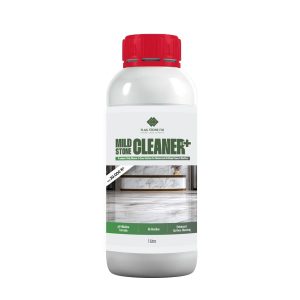 MILD STONE CLEANER PLUSMILD STONE CLEANER PLUS Alkaline Stone & Marble CleanerView product →


