
Bathroom Tile Cleaner Guide: How to Clean Bathroom Tiles, Grout and Hard Water Stains
How to choose a bathroom tile cleaner and deep clean bathroom tiles: limescale, soap scum, floor grime and mould in grout, and which product to use for each job.


The best bathroom tile cleaner depends on what is actually on the tile. White, chalky marks and dull soap film are mineral deposits that need a descaler; grey, greasy grime on the floor needs an alkaline deep cleaner; black spots in grout lines and corners are mould; and everyday dust only needs a pH-neutral cleaner. Using one strong product for all four is why bathrooms either stay half-clean or end up with damaged grout and etched stone.
This guide matches each bathroom problem to the right cleaner and walks you through a full deep clean, from walls to floor. It is written by Flagstone Fix, the stone-care brand of Zyax Chem Pvt Ltd and an authorised partner of Faber Italy Tile & Stone Care. For the full range, see our tile cleaners.
What makes bathroom tiles dirty
Bathrooms collect four different kinds of dirt, and each one needs a different chemistry:
- Limescale and hard water marks. Much of India has hard water. As it dries on walls, glass and taps it leaves calcium and magnesium deposits that build into white crust and dull patches.
- Soap scum. Soap and shampoo react with hard water minerals to form a sticky grey film that traps dirt, especially on the lower part of shower walls.
- Greasy grime on the floor. Body oils, footwear dirt and product residues build up in the texture of floor tiles and grout, turning them grey over months.
- Mould and mildew. Warm, damp corners and grout lines with poor ventilation grow black and green spots, most of all during the monsoon.
The best bathroom tiles cleaning liquid for each job
| Problem | Cleaner | Use on |
|---|---|---|
| Limescale, soap scum, hard water marks | Vetro Power Bathroom Tub, Tile & Stone Cleaner Plus | Tiles, tubs and the stone surfaces its label lists as compatible |
| Built-up grime on bathroom floors | Faber 30 | All materials, including ceramic, porcelain, marble and granite |
| Daily cleaning of ceramic and porcelain | Faber Algafloor | Ceramic, porcelain and other compact tiles |
| Daily cleaning of marble and natural stone | Faber Neugel | Marble, granite and other absorbent stone |
Two acid cleaners also have a place, but only on acid-resistant tiles such as ceramic, porcelain and granite: Faber Deterfug for deep-set dirt in textured floor tiles, and Faber Disycott for cement haze and heavy limescale after a bathroom renovation. Never use them on marble or limestone.
How to clean bathroom tiles: a step-by-step deep clean
Work from the top down, so dirty water runs onto surfaces you have not cleaned yet.
- Ventilate and protect yourself. Open the window, switch on the exhaust fan and wear rubber gloves and eye protection. Vetro Power is classified as Danger on its safety data sheet and can burn skin and eyes.
- Test a hidden spot first. Try each product on a small, out-of-sight area, especially on natural stone, coloured grout or decorative tiles.
- Descale the walls and fittings. Apply Vetro Power Bathroom Tub, Tile & Stone Cleaner Plus as its label directs to shower walls, the tub surround and other areas with white marks or soap film. Agitate with a soft brush or non-scratch pad, then rinse well with clean water.
- Deep clean the floor. Dilute Faber 30 as its label directs, spread it over the floor, leave it briefly, then scrub with a stiff brush, paying attention to grout lines. Pick up the dirty solution and rinse.
- Rinse and dry. A final rinse removes every trace of cleaner. Drying with a squeegee or microfibre cloth stops new water spots forming straight away.
How to clean toilet tiles
Tiles around the toilet collect limescale, splash marks and grime faster than the rest of the bathroom. Clean them the same way as the walls, working from the top down and finishing with the floor:
- Remove loose dirt with a dry brush or cloth, including the grout lines behind the toilet.
- Treat limescale and soap scum on glazed wall tiles with Vetro Power Bathroom Tub, Tile & Stone Cleaner Plus, following the label, and wipe or rinse it off.
- Deep clean the floor tiles with Faber 30, an alkaline cleaner for greasy, traffic-related dirt, then rinse with clean water.
- Keep it clean with a pH-neutral cleaner such as Faber Algafloor once or twice a week.
Do not use toilet-bowl acids on the tiles around the toilet if the floor or skirting is marble or limestone: acid etches calcium-based stone and leaves dull patches.
How to clean bathroom floor tiles
Bathroom floors take the most dirt, and the first rule is to know what the floor is made of. Ceramic, vitrified and porcelain floors tolerate both alkaline and acid cleaners. Marble, limestone and other calcium-based stone do not: any acid, including vinegar, lemon and toilet-bowl cleaners, will etch them and leave dull, rough patches that need professional polishing to fix.
Faber 30 is the safe deep cleaner for any bathroom floor, because it is alkaline and suitable for all materials, marble included. Between deep cleans, mop ceramic and porcelain floors with Faber Algafloor and marble floors with Faber Neugel, both pH-neutral cleaners made for daily use. If your bathroom floor is slippery when wet, see our guide to making bathroom tiles non-slip.
How to remove hard water stains from bathroom tiles
Hard water stains are mineral deposits, so they dissolve with a descaler, not with stronger scrubbing. On glazed wall tiles, tubs and glass, Vetro Power Bathroom Tub, Tile & Stone Cleaner Plus is formulated for exactly this job: limescale, soap residue and mineral build-up. For thick deposits, give it a second application rather than switching to a scouring pad, which scratches the glaze.
After a renovation, a white haze on new tiles is usually cement and grout residue rather than hard water; Faber Disycott removes it from acid-resistant tiles, as explained in our guide to removing cement stains from tiles. On marble vanities and stone tops, avoid acid descalers altogether; our guide to hard water marks on marble and quartz vanities covers the safe approach.
A simple routine that keeps bathroom tiles clean
- Every day: squeegee shower walls and glass after use, and keep the exhaust fan running for 15 to 20 minutes.
- Every week: mop the floor with Faber Algafloor or Faber Neugel and wipe down wet areas.
- Every month, or sooner in hard-water areas: descale walls and fittings and deep clean the floor with Faber 30.
- Once a year: check the grout. Clean, sealed grout resists mould and stains far better; see our grout cleaning and protection guide.
Hotels, gyms, hospitals and offices with heavily used washrooms need the same routine at a higher frequency, usually daily neutral cleaning and a weekly deep clean.
Mistakes that damage bathroom tiles
- Mixing products. Never mix an acid cleaner with bleach or another chlorine product; together they release toxic gas. Rinse fully between products.
- Acid on marble. Toilet-bowl acids, vinegar and lemon etch marble and limestone floors and vanities in seconds.
- Scouring pads and steel wool. They scratch glazed tiles and chrome, and the scratches then hold dirt.
- Bleach on coloured grout. It fades and weakens the grout without stopping mould from coming back.
- Leaving cleaner to dry on the surface. Residue attracts dirt and leaves streaks; always rinse unless the label says no rinsing is needed.
Frequently asked questions
What is the best bathroom tiles cleaning liquid?
There is no single best product, because bathrooms have different kinds of dirt. Use a descaler such as Vetro Power Bathroom Tub, Tile & Stone Cleaner Plus for limescale and soap scum, an alkaline deep cleaner such as Faber 30 for floor grime, and a pH-neutral cleaner such as Faber Algafloor for daily cleaning.
How do I remove hard water stains from bathroom tiles?
Use a limescale remover made for bathrooms, such as Vetro Power, applied as the label directs, then agitate with a soft brush and rinse. Repeat on thick deposits instead of scrubbing harder, and keep acid descalers off marble and limestone.
Can I use the same cleaner on bathroom walls and floors?
For daily cleaning, yes: a pH-neutral cleaner suits both. For deep cleaning, walls usually need a descaler for limescale and soap film, while floors need an alkaline cleaner such as Faber 30 for greasy, traffic-related dirt.
How do I clean mould from bathroom tile grout?
Faber Cottosolv is not made for mould; its data sheet covers stripping wax, resin and polymers and removing greasy and oily stains, so contact us for the right treatment for mould in grout. Improve ventilation and seal the grout afterwards, otherwise mould tends to return.
Is acid safe for bathroom tiles?
Acid cleaners are safe on ceramic, porcelain and granite when used as directed and rinsed off, but they damage marble, limestone and some coloured grouts. If you are unsure what your tiles are, use a neutral or alkaline cleaner, or test a hidden spot first.
Get the right bathroom tile cleaners
Flagstone Fix supplies the full Faber Italy Tile & Stone Care range to homes, hotels, hospitals and facility teams across India. Browse our tile cleaners, or ask for bulk pricing for larger properties. Not sure what your tiles need? Send a photo on WhatsApp at +91 87792 40420 and our team will recommend the right products.
Products mentioned in this guide
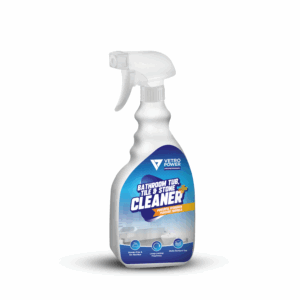 Vetro Power Bathroom Tub, Tile & Stone Cleaner PlusVetro Power Bathroom Tub, Tile & Stone Cleaner Plus for Limescale & Soap ScumView product →
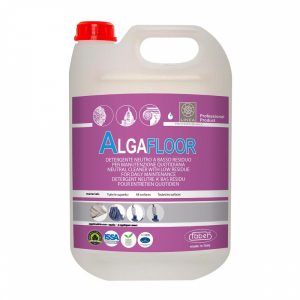 Faber AlgafloorFaber Algafloor pH-Neutral Stone Cleaner for Porcelain, Ceramic & TileView product →
 Faber NeugelFaber Neugel pH-Neutral Stone Cleaner for Natural Stone with Medium-High AbsorptionView product →
 Faber DeterfugFaber Deterfug Acidic Deep Cleaner for Acid-Resistant Stone & Tile SurfacesView product →
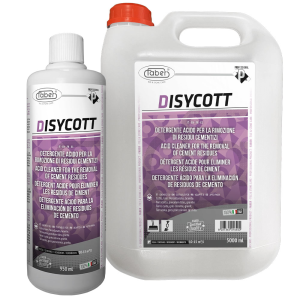 Faber DisycottHighly concentrated, acid-based, after setting cleaner.View product →


