
Why White Italian Marble Turns Yellow and How Professionals Restore It


In most cases, yellowing on white Italian marble is caused by moisture rising from beneath the stone, not by dirt on the surface. That is why scrubbing or polishing rarely fixes it: the yellow stain sits inside the marble, and it keeps returning until the source of the moisture is dealt with.
For owners of Statuario, Calacatta or Carrara floors, this matters. These stones are chosen for their bright white base, and even a faint yellow tint changes the whole look of a room. This guide explains why white marble turns yellow, how to tell moisture yellowing apart from an ordinary surface mark, and how a professional restoration removes the discolouration and protects the stone afterwards.
Flagstone Fix, the stone-care brand of Zyax Chem and an authorised partner of Faber Italy, restores and protects premium marble floors for homes, hotels and commercial spaces.
Why White Marble Reacts to Moisture
Marble is a natural stone made mostly of calcium carbonate, and even a polished slab is porous. Its fine network of pores, called capillaries, lets water travel through the stone, both downward from the surface and upward from the bed it is laid on.
When water moves through marble, it carries dissolved minerals and impurities with it. Many white marbles also contain natural traces of iron and other minerals in their structure. As the water evaporates at the surface, these substances are left behind in the top layer of the stone, and over time they show up as yellow or brownish patches.
On a dark stone, this kind of discolouration is barely noticeable. On white Italian marble, where the value of the floor lies in its clean white background and crisp veining, it is the first thing anyone sees.
What Causes Marble Yellowing in Indian Homes and Buildings
Three sources of moisture cause almost all the yellow stains we see on white marble in India.
1. Rising damp from the base
Rising damp is moisture that travels upward from the ground, the cement screed or the bedding mortar into the stone. Ground-floor flats, lobbies, podium-level floors and areas laid directly on a fresh, still-damp screed are especially exposed. Because the moisture comes from below, the yellowing often appears in patches or along the joints, and it can return even after the surface has been cleaned.
2. Humidity and moisture trapped below the stone
Mumbai’s monsoon and the high humidity of coastal cities keep the layers beneath the marble damp for long periods. Hidden plumbing leaks, wet bathroom walls next to marble floors, and water seeping in near balconies or terraces all keep feeding moisture into the slab from underneath.
3. Water left standing on the surface
Water left unattended on marble, such as mopping water that is not dried, a leaking planter or a wet mat, soaks into the pores. If the stone is unprotected, that water can draw impurities into the slab and leave a yellow mark once it dries.
In every case, the pattern is the same: water enters the marble, moves through it, and leaves discolouration behind as it dries.
Moisture Yellowing vs Surface Discolouration: How to Tell the Difference
Not every yellow tint comes from inside the stone. A build-up of dirt, or an old wax or coating that has aged, can also make white marble look yellow. The treatment is completely different, so the first step is always to identify which one you are dealing with.
| Moisture yellowing | Surface discolouration | |
| Where it sits | Inside the stone | On top of the stone |
| How it looks | Patches, often near joints, walls, bathrooms or entrances | Even dullness across walkways and high-traffic areas |
| After normal cleaning | No change, or returns within weeks | Improves or disappears |
| Main cause | Rising damp, trapped humidity or standing water | Dirt film, residue from cleaners, ageing wax or coatings |
| What it needs | Moisture diagnosis, stain extraction and an anti-rising damp treatment | Professional deep cleaning and a residue-free maintenance routine |
The Most Common Mistake: Sealing Over a Damp, Yellowed Floor
The most common mistake is to apply a sealer straight over yellowed marble in the hope of “locking in” the white. If the stone still holds moisture, a sealer cannot penetrate properly, and a solvent-based sealer in particular will not work on humid stone, because the water inside the pores blocks the solvent from getting in. The yellow stain stays trapped underneath, and the moisture keeps rising.
Other mistakes we see regularly:
• Using bleach or harsh household chemicals. They can damage the polish and do not reach the cause.
• Polishing to hide the yellow. Polishing works on the surface; moisture yellowing sits inside the stone.
• Flooding the floor with water during cleaning. More water in the pores means more yellowing over time.
Signs Your Marble Needs Professional Attention
• Yellow patches that stay the same after cleaning, or come back within a few weeks.
• Discolouration that follows the joints or spreads outward from a wall, bathroom or entrance.
• Dark, damp-looking marks that never fully dry, especially after the monsoon.
• White powdery deposits appearing alongside the yellowing, a sign that salts are being carried up by moisture.
• A newly laid white marble floor that starts yellowing within months of installation.
The longer moisture keeps moving through the slab, the more discolouration builds up in the stone. Early treatment is simpler and costs less than restoring a floor that has been yellowing for years.
How Flagstone Fix Restores Yellowed Marble
Restoring yellowed white marble is a sequence of steps, and each one depends on the previous one. This is the process our team follows on luxury marble restoration projects.
1. Site assessment and moisture check
We inspect the floor, map where the yellowing appears and trace the likely source of moisture: rising damp, a hidden leak, a wet adjoining wall or standing water. If the source is a plumbing or waterproofing fault, it needs to be repaired first. Otherwise, the yellowing will return no matter how well the stone is treated.
2. Patch test
On premium Statuario or Calacatta, we always treat a small test area first. This confirms how the stone responds and shows the client the expected result before the full floor is treated.
3. Drying out the stone
The marble must be completely dry before any treatment. On floors affected by rising damp, this can take time, and rushing it is the main reason treatments fail.
4. Stain extraction
The yellow discolouration is drawn out of the stone with OXIDANT, a water-based stain remover formulated to remove yellowing and yellow stains caused by rising damp or water penetration. It is thickened with FABER POULTICE into a paste, so it stays in contact with the stone and pulls the stain out as it dries. Heavily affected areas may need more than one application.

5. Moisture protection from below
Next, the stone is treated with an anti-rising damp impregnator such as Faber Hidro SST or the water-based Faber Protex WB. These penetrate deep into the marble and act as a stone moisture barrier without forming a film, so the stone can still breathe. On new installations or relaid slabs, we apply this treatment to all six sides of each slab before it is laid, so moisture from the screed cannot reach the surface.
6. Final polishing and buffing
Where the shine needs to be refreshed, the floor receives a final polish with Faber A3 Yellow followed by buffing, for a glass-like finish on the restored white surface.
7. Top coat protection
Finally, once the stone is fully dry, a stain-resistant top coat is applied. A solvent-based sealer such as PROTEX protects against water and oil without changing the natural colour of the marble.
Learn more about our stone protection services.
A Simple Routine to Keep White Marble White
• Daily: dust-mop to remove grit before it dulls the polish.
• Weekly: damp-mop with a residue-free stone cleaner such as Flagstone Fix Mild Stone Cleaner Plus, which contains no waxes or polymers and supports the performance of sealers. Use a well-wrung mop, never a flooded floor.
• After spills and mopping: dry the surface rather than leaving water to soak in.
• Before and after the monsoon: check ground-floor areas, bathroom thresholds and walls for new damp marks.
• Re-protection: follow the schedule on the sealer’s technical data sheet, or ask our team to assess the floor.

Frequently Asked Questions
Why is my white marble turning yellow?
In most cases, moisture is moving through the stone. Rising damp from the screed, humidity trapped below the slab, or water left standing on the surface carries impurities into the marble, and they show up as yellow patches when the water dries.
Can yellow stains on marble be removed permanently?
Yes, provided the source of the moisture is fixed. The stain is extracted from the stone, and the marble is then protected against rising damp. If the moisture source remains, the yellowing can return.
Will polishing remove marble yellowing?
No. Polishing works on the surface, while moisture yellowing sits inside the stone. Polishing is used only as a final step, after the stain has been removed.
Should I use a water-based or solvent-based sealer on yellowed marble?
First, remove the stain and let the stone dry fully. For moisture coming from below, a water-based anti-rising damp treatment is the right choice. A solvent-based stain-resistant sealer can then be applied as a top coat, but only on completely dry stone.
How can I prevent yellowing on a new white marble floor?
Make sure the screed is dry before laying, and treat all six sides of each slab with an anti-rising damp impregnator before installation. Read more in our guide to sealing white marble to prevent yellowing.
How long does marble yellowing restoration take?
It depends on the floor area, how far the yellowing has spread and how long the stone takes to dry. We confirm the timeline after the site assessment and patch test.
Restore the White in Your Marble
If your Statuario, Calacatta or Carrara floor has started to turn yellow, book a site assessment and let our team find the cause and restore the stone. Explore our stone protection services or message us on WhatsApp at +91 87792 40420.
Distributor or applicator in the GCC or SAARC region? Partner with Flagstone Fix.
Products mentioned in this guide
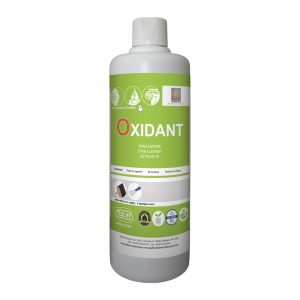 Faber OxidantFaber Oxidant Stain Remover for Marble & Natural StoneView product →
 Faber PoulticePowdered thickening additive designed for use with Faber stain removers.View product →
 Faber Hidro SSTFaber Hidro SST Water-Repellent Treatment for Natural StoneView product →
 Faber Protex WBEco-friendly, water-based, easy to apply impregnating sealer to protect natural stone against rising damp.View product →
 Faber A3 YellowFaber A3 Yellow Polishing Powder for Marble, Natural Stone & LimestoneView product →
 Faber ProtexFaber Protex Protective Treatment for Water, Oil & Stain ResistanceView product →


